
why record your story?
Sasha Neal shares a personal experience
The Olympics coming to London in 2012 was the push I needed to record my dad’s life story. Back then my dad was 73. He’d had an interesting career in sport and I’d been thinking of doing an informal interview with him to capture his memories, but kept putting it off. I was working as a videographer in those days, and decided to make a series of short films about past Olympians looking back on their careers and reflecting on London hosting the Olympics for the first time since 1948.
I’d start with my dad, I thought, and asked him if he’d be willing to be involved. He agreed, and so one afternoon I went to his house and set up my camera and microphone. Talking with my dad in such a focused way gave me the chance to ask questions I’d never asked before, and to hear reflective, surprising and sometimes moving answers. Of course I’d heard about my dad’s sporting career as I grew up, but he spoke in more depth than if we were having an idle conversation, and I found his recollections about his childhood, his parents and his relationships particularly fascinating.
I never did make that video series about past Olympians. I gave birth to my first child not long after and life took over in the way it does. Little did I know that afternoon in 2012, when I imagined I had plenty of time left with my dad, that he would soon be diagnosed with an aggressive form of dementia and we would lose him a few short years later.
When Rachel and I worked together on our life stories project in care homes, Who Cares?, one of the things we hadn’t been prepared for was the gratitude and appreciation of the family members of our participants. The sons and daughters of the older people who shared their life stories for the project were moved and delighted to receive edited audio recordings of their loved one’s memories, which they could keep and share with the wider family. The impact of having the opportunity to talk about their lives and to be listened to was just as profound for our participants.
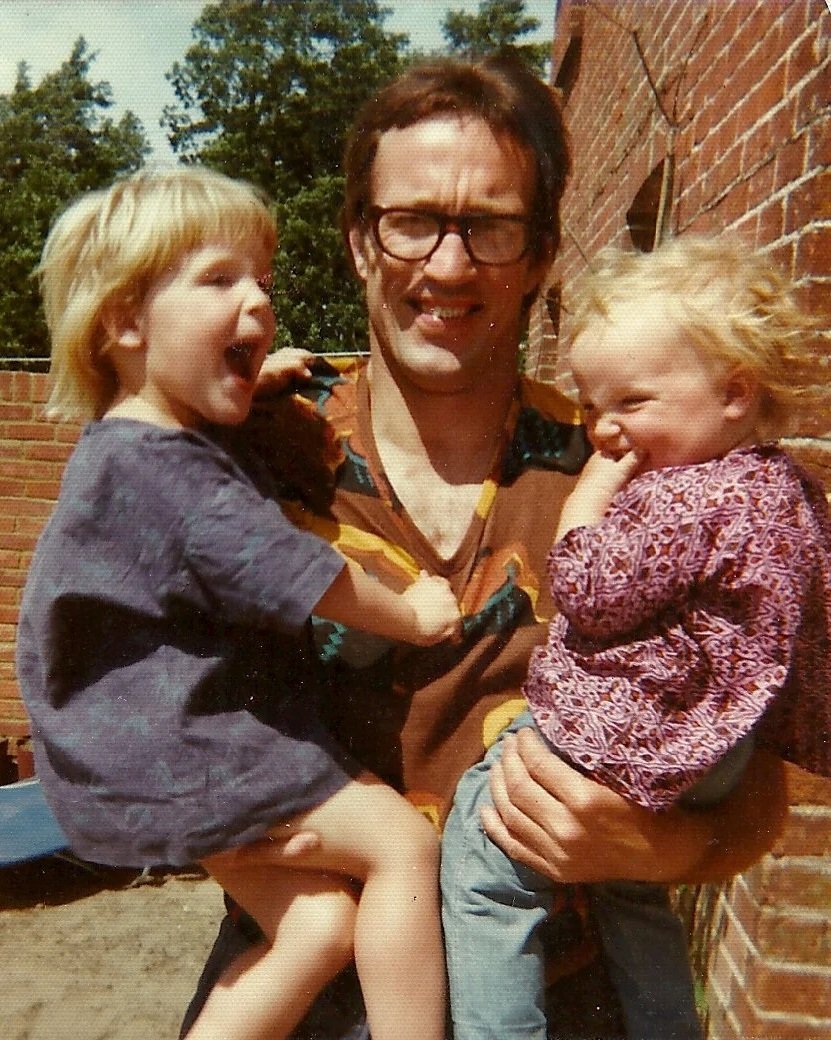
Now that my dad’s no longer with us, the video files I created are incredibly precious to me. I’m glad we talked for so long; I’m very glad I could make use of my professional experience in filming, interviewing and editing. When I have those days of missing my dad painfully, I can sit at my desk and watch him talk and laugh, hear us teasing each other between questions in the way we always did. His familiar voice, his expressions — it’s almost like spending time with him again. And of course I have a full record of his memories. Although I’m sure I’d remember the gist of what he told me if I hadn’t recorded it, I know I’d never be able to remember the details, all those little things that make reminiscences so vivid and revealing.
Even though I value the recording of the conversation I had with my dad, I think the audio files we created for the Who Cares? project were especially powerful because our participants were speaking to an empathic listener from outside their family network. Sometimes, being heard by a neutral person can allow us to be really open, and also encourage us to include all the facts and context of our life events.
You know that old question about what you’d rescue if your house was on fire? For me, it would be the hard drive containing not just my photos, but the video and audio files I made with both my mum and dad.
If you’d like to discuss working with us to record your own or a loved one’s memories, please contact us here.